
 REXEL 35.840 € (0,00 %)
  ASM INTERNATIONAL 801.200 € (+1,60 %) DBV TECHNOLOGIES 2.350 € (-1,51 %) SARTORIUS STED BIO 166.700 € (-2,00 %) TIKEHAU CAPITAL 15.880 € (+1,40 %) AMG 29.400 € (-0,27 %)
  MEXEDIA 4.600 € (-11,88 %) WE.CONNECT 25.500 € (0,00 %) AIRBUS 202.200 € (-0,88 %) NN GROUP 81.600 € (+0,32 %) AHOLD DEL 34.360 € (-0,81 %) ENGIE 27.110 € (+3,99 %) GTT 195.700 € (-0,81 %) INVENTIVA 3.800 € (-3,18 %) ARCADIS 40.620 € (+1,80 %)
  SHELL PLC 39.720 € (+2,11 %) PUBLICIS GROUPE SA 92.620 € (-0,96 %) LVMH 475.150 € (+0,39 %) FDJ UNITED 21.930 € (-2,10 %) KERING 284.200 € (-2,22 %) HERMES INTL 1 531.500 € (-1,23 %) AXA 44.940 € (-0,62 %) ORDISSIMO 0.450 € (+9,76 %) BE SEMICONDUCTOR 198.250 € (+0,38 %) SANOFI 74.470 € (+2,34 %) VIVENDI SE 1.596 € (-19,48 %) AKWEL 6.600 € (+0,92 %) HAFFNER ENERGY 0.325 € (+1,72 %) VEOLIA ENVIRON. 34.470 € (-3,72 %) SLIGRO FOOD GROUP 10.500 € (-1,50 %) SCHNEIDER ELECTRIC 289.600 € (+1,76 %) EXPLOSIFS PROD.CHI 265.000 € (-1,85 %) ELEC.STRASBOURG 163.000 € (-16,75 %) BUREAU VERITAS 27.660 € (-0,90 %) CTP 15.580 € (-2,87 %) ATOS GROUP 31.960 € (+2,44 %) KALRAY 7.000 € (-5,66 %) ASML HOLDING 1 434.200 € (-0,40 %) MAGNUM 16.196 € (+0,24 %) SEMCO TECHNOLOGIES 39.900 € (-1,85 %)
  FLOW TRADERS 26.480 € (+2,72 %) ABN AMRO BANK N.V. 39.000 € (+1,27 %) LATECOERE 0.015 € (+4,23 %) MANITOU BF 22.000 € (+10,00 %) DBT 0.042 € (+0,48 %) DERICHEBOURG 9.300 € (-1,06 %) THALES 245.900 € (+1,07 %) PHILIPS KON 22.740 € (-0,61 %) ABIVAX 106.300 € (-2,03 %) WINAMP GROUP 0.410 € (+3,67 %)
  LLAMA GROUP 0.410 € (+3,67 %) WENDEL 83.850 € (-0,47 %) UNILEVER 55.740 € (-1,54 %) UBISOFT ENTERTAIN 5.692 € (-2,57 %) UMG 14.435 € (-25,40 %) CREDIT AGRICOLE 19.275 € (+2,61 %) ESSILORLUXOTTICA 164.050 € (+0,28 %) BIOMERIEUX 69.100 € (-3,83 %) BASIC-FIT 34.620 € (-3,03 %) IMCD 94.780 € (-1,80 %)
 |
01/07/2026 09:15
Breda University: disabled air travellers still face barriers despite existing regulationsEQS-News: Breda University of Applied Sciences (BUas) / Key word(s): Miscellaneous/Miscellaneous Breda University of Applied Sciences (BUas) research maps the full journey of air travellers with physical and mental disabilities and calls for a co-creation approach just as European accessibility law enters its second year. BREDA, Netherlands, July 1, 2026 /PRNewswire/ -- As millions of Europeans prepare for summer holidays, this study sheds light on a reality that often goes unnoticed. With nearly one in four adults in the EU living with a disability – some 90 million people – making air travel accessible is a mainstream necessity and an increasing priority for the industry. Yet, despite extensive regulations and current standards, flying still is often a stressful and sometimes undignified experience for those passengers. The research shows that barriers persist at every stage of the journey.
The risk of exclusion The study, published in Research in Transportation Business & Management (Elsevier), comprises passengers with a wide range of disabilities, including wheelchair users, people with visual or hearing impairments, and those with hidden conditions such as autism or anxiety. The researchers examined each touchpoint of the passenger journey, from (online) booking to baggage claim, with the goal of better understanding and supporting the current situation. With expected passenger growth in the coming decade, the industry risks scaling a system that excludes a substantial share of the population. To address this, BUas is working with European university partners on INCLAVI (Inclusive Aviation), an EU Erasmus+-funded project developing the education and knowledge needed to make air travel more inclusive. The researchers introduced two new concepts: the cumulative effect of barriers and standardised flexibility. The problem runs deeper than infrastructure While physical barriers remain widespread, the study highlights something more pervasive: the cumulative effect of barriers. A missing detail at bookings, staff who fail to pass on disability-related information at check-in, a wheelchair damaged in the hold – none of these is catastrophic in isolation. Together, they form a pattern that exhausts passengers and erodes their dignity and trust in the aviation system. 'Many regulations and standards exist, yet the struggles remain,' says Simone Moretti, senior researcher in Tourism Impacts on Society at BUas. The aviation sector has good intentions, but consistent, dignified service requires more than compliance. It requires truly understanding what these passengers go through.' A call for co-creation The researchers call on the aviation industry to actively involve passengers with physical and mental disabilities in the design of new services and infrastructure. Only through genuine co-creation can systemic change take root. Aviation does not have to choose between uniform safety standards and individual adaptability; improvements can be consistent across all airports while still being tailored to each passenger's specific needs. As a practical resource, BUas and its partners have developed a free training course for aviation professionals. Note to editors Breda University of Applied Sciences is an internationally oriented higher education institute with different study programmes in the leisure, tourism and hospitality field.
 01.07.2026 CET/CEST Dissemination of a Corporate News, transmitted by EQS News - a service of EQS Group. 2357660 01.07.2026 CET/CEST Source : Webdisclosure.com |
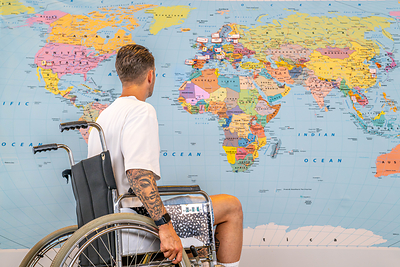

 View original content to download multimedia:
Cotations différées d'au moins 15 minutes (Paris, Amsterdam, Bruxelles, Lisbonne).
Cotations à la clôture (Francfort, New-York, Londres, Zurich).
Flux de cotations : Euronext (Places Euronext et Cours des Devises).
Bourse : technologie Cote Boursière